
Solid waste management in Darfur poses significant challenges given the region’s harsh arid environment, ongoing conflict, displacement of populations, and low infrastructural capacity. Unregulated disposal of waste—whether in urban centers like Nyala, in refugee/IDP camps, or in rural settings—results in soil contamination, water pollution, increased vector-borne diseases, and ecosystem degradation. Weak institutional oversight coupled with fragmented governance exacerbates these environmental pressures. Addressing the solid waste issue demands integrated interventions that focus on capacity building, community-based management, environmental education, and the development of sustainable waste collection and disposal practices.
Solid waste comprises non-liquid, non-gaseous materials generated from human activities. In Darfur, rapid urbanization (both in traditional settlements and in IDP camps), conflict-induced displacement, and limited public infrastructure have contributed to haphazard waste disposal practices. With conventional waste management systems largely absent or overwhelmed, wastes are frequently discarded in open dumps, burned, or scattered in the environment. This lack of controlled management affects environmental quality, public health, and the resilience of local ecosystems—thereby compounding the vulnerability experienced by communities in one of the world’s most challenging settings.
Sources and Characteristics of Solid Waste in Darfur
Urban and Peri-Urban Waste Generation
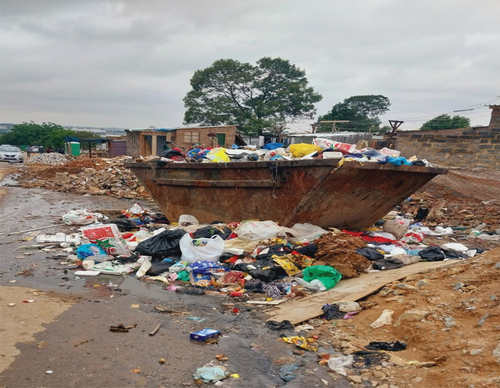
- Municipal Waste: In cities such as Nyala and other regional centers, rapid population growth and urban sprawl have led to an increase in municipal solid waste. With inadequate waste collection services, residents often dispose of domestic waste in open areas, along streets, or in abandoned lots.
- Refugee and IDP Camps: The forced displacement resulting from protracted conflict has led to the proliferation of camps where waste management infrastructures are minimal. These camps produce various waste types, including organic refuse, plastics, and materials from makeshift shelters—all of which are compounded by the difficulties inherent in managing waste under emergency conditions.
Rural and Agricultural Waste
- Agricultural Residues: In rural areas, agricultural practices produce significant quantities of plant residues. The absence of organized collection systems often results in these residues being burned openly, leading to air pollution and soil nutrient loss.
- Informal Industrial and Craft Activities: Small-scale industries and artisanal activities, sometimes operating in informal settings, also generate packaging materials, scrap, and other industrial wastes with limited options for safe disposal.
Environmental Impacts
Soil and Land Degradation
- Erosion and Contamination: Open dumping and uncontrolled burning of waste remove vegetation cover from soils, leaving them more vulnerable to erosion. Organic and inorganic pollutants accumulate in the soil, reducing fertility and impacting local agriculture.
Water Resource Pollution
- Surface and Groundwater Contamination: Rainfall and flash floods transport improperly disposed waste into nearby wadis, rivers, and groundwater reserves. This contamination negatively affects water quality for both human consumption and ecosystem health, a critical issue given Darfur’s scarcity of reliable water resources.
Air Quality and Public Health
- Emission of Pollutants: The burning of waste—a common disposal method—releases particulates and toxic compounds into the atmosphere. These emissions contribute to air pollution, which can aggravate respiratory illnesses and other health problems among local populations.
- Disease Transmission: Open waste management practices create breeding grounds for disease vectors such as flies, rodents, and mosquitoes. Combined with poor sanitation, these conditions elevate the risk of water- and vector-borne diseases in densely populated or camp settings.
Ecosystem Integrity and Biodiversity
- Habitat Loss and Ecosystem Disruption: Improper waste disposal disrupts natural habitats. The contamination of land and water affects local flora and fauna, exacerbating biodiversity loss and weakening the overall resilience of ecosystems already stressed by climate variability.
Governance and Policy Challenges
Institutional Constraints
- Limited Enforcement Capacity: Weak regulatory frameworks and the lack of routine monitoring contribute to ineffective enforcement of waste management policies. This is compounded in conflict-affected areas where government institutions are overstretched.
- Fragmented Urban Planning: Rapid urban growth in Darfur often occurs without comprehensive planning, leading to inadequate waste infrastructure and interrupting the implementation of integrated solid waste management systems.
Conflicts Between Formal and Informal Systems
- Customary Practices vs. Modern Regulations: In many communities, traditional practices have governed local resource use. The imposition of formal waste management norms from higher authorities may not align with local realities, leading to resistance or ineffective adoption.
- Impact of Displacement and Conflict: Military activities, forced displacement, and the establishment of temporary camps further complicate waste management. In these environments, immediate survival concerns overshadow long-term environmental measures, leading to ad hoc waste disposal practices .
Policy Recommendations
To address the growing problem of solid waste in Darfur, a multi-faceted policy approach is recommended:
Develop and Strengthen Integrated Waste Management Systems
- Urban and Camp-Based Waste Collection: Invest in establishing organized waste collection and disposal systems, including regular pickup services and dedicated recycling centers, especially in urban areas and IDP camps.
- Modern Landfill and Recycling Practices: Introduce sanitary landfills with proper containment to prevent leachate and contamination, coupled with recycling programs to recover useful materials.
Enhance Regulatory Frameworks and Institutional Capacity
- Clear Policies and Enforcement: Formulate clear regulations on waste disposal, with well-defined standards and penalties. Strengthen the capacity of local authorities to monitor, enforce, and incentivize compliance with these regulations.
- Use of Technology: Implement GIS and remote sensing tools for real-time monitoring of dumping sites and environmental impact, enabling a proactive response to emerging issues.
Promote Public Awareness and Community Engagement
- Environmental Education Campaigns: Raise awareness among local populations about the environmental and health hazards of improper waste disposal. Educational programs should be tailored to the local context and include practical guidance on waste segregation and safe disposal.
- Community-Based Initiatives: Encourage participation by local communities in waste management decision-making and in the implementation of neighborhood cleanup projects. Empowering local stakeholders can help bridge the gap between formal policy and customary practices.
Coordinate with Humanitarian and Development Agencies
- Integrated Camp Management: Work with international organizations such as UN OCHA and UNEP to integrate solid waste management into the broader environmental planning of internally displaced persons (IDP) camps. This should include improved sanitation, waste sorting, and safe disposal methodologies.
- Funding and Technical Support: Attract international funding to support infrastructure development and capacity building in waste management, ensuring that resources are available for both short-term emergency response and long-term sustainability.
Solid waste management in Darfur represents a significant environmental challenge that intersects with public health, urban planning, and conflict dynamics. Uncontrolled waste disposal contributes to soil degradation, water contamination, and air pollution—threatening both local ecosystems and the well-being of communities. Given the compounded challenges of displacement and limited governance capacity, a holistic approach that integrates technological, institutional, and community-based strategies is essential. By aligning policy frameworks with local practices and engaging multiple stakeholders, Darfur can progress toward a more sustainable and resilient solid waste management system.